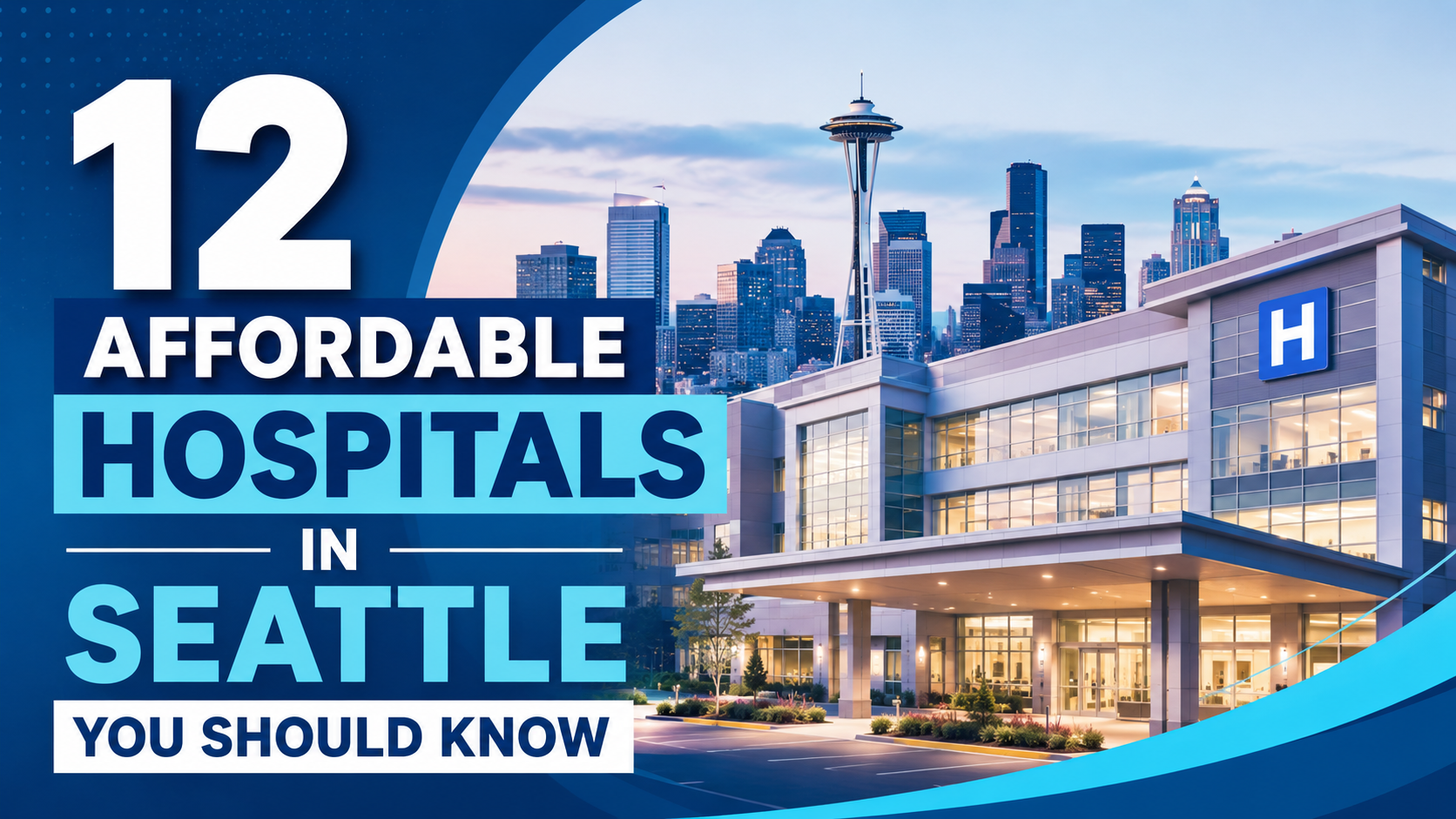
Affordable hospitals in Seattle include major nonprofit health systems like UW Medicine, Swedish Health Services, and Virginia Mason Medical Center, all of which offer financial assistance and charity care for qualifying patients. Community health centers such as ICHS, Neighborcare Health, and Sea Mar provide sliding-scale primary care, while walk-in options like ZoomCare and MultiCare Indigo Urgent Care offer transparent, budget-friendly pricing for non-emergency needs.
Seattle’s healthcare landscape can feel overwhelming at first glance. Between massive academic medical centers, neighborhood community clinics, and walk-in urgent care chains, it’s not always obvious where to turn especially if cost is a major factor in the decision. The good news is that most of the region’s major systems are built around a shared principle: no patient should be turned away from necessary care simply because they can’t pay full price upfront.
This guide breaks down twelve hospitals, health systems, and community clinics that Seattle residents commonly rely on for both affordability and quality. We’ll look at what each one offers, who they tend to serve best, and how their financial assistance programs generally work all so you can make a more informed decision about where to seek care in 2026.
What Makes UW Medicine an Affordable Option in Seattle?
UW Medicine keeps care accessible through a structured Financial Assistance Program available to eligible low-income and underinsured patients across its facilities. The system includes the University of Washington Medical Center with both its Montlake and Northwest campuses, along with Harborview Medical Center, which is widely known as the region’s primary safety-net hospital for complex and trauma care.
Because UW Medicine handles a large share of the region’s most complicated medical cases, it has built out dedicated financial counseling resources to help patients navigate the billing process. Eligibility for assistance is generally tied to federal poverty guidelines and financial counselors are available to walk patients through the application steps rather than leaving them to figure it out alone.
Patients interested in applying can review UW Medicine’s official financial assistance and billing resource page for current program details and application steps.
Key Takeaway: UW Medicine combines advanced, complex-care capability with a formal Financial Assistance Program, making it a strong option for patients who need serious medical care but are worried about cost.
How Does Swedish Health Services Support Lower-Income Patients?
Swedish Health Services supports lower-income patients through sliding-scale discounts and charity care that adjust based on federal poverty guidelines. As one of the largest nonprofit health systems in the region, Swedish operates campuses in First Hill, Cherry Hill, Ballard, and Edmonds, giving patients multiple location options depending on where they live or work.
Because Swedish is structured as a nonprofit network, its charity care policies are generally built around the idea that treatment shouldn’t be delayed or denied due to a patient’s financial situation. Sliding-scale discounts typically mean that what a patient owes is calculated in relation to household income and family size, rather than a flat rate applied to everyone.
This model tends to work well for patients who have some ability to pay but not enough to comfortably absorb a large hospital bill a common gap that many people in Seattle fall into.
Key Takeaway: Swedish Health Services' nonprofit structure and multi-campus presence make it a practical choice for patients seeking charity care or sliding-scale discounts based on income.
Why Is Virginia Mason Medical Center Considered a Reliable Choice?
Virginia Mason Medical Center is considered a reliable choice because it pairs strong regional recognition with dedicated financial counselors who help patients manage billing and hardship situations. Located on 9th Avenue in downtown Seattle, the hospital has built a reputation as one of the highest-rated facilities in the region for coordinated, patient-centered care.
What sets Virginia Mason apart for cost-conscious patients isn’t just its clinical reputation — it’s the presence of financial counselors whose specific job is to help people understand their bills and explore hardship programs. This kind of hands-on support can make a real difference for patients who might otherwise avoid seeking care out of fear of an unmanageable bill.
Key Takeaway: Virginia Mason Medical Center offers a combination of high-quality regional care and direct financial counseling support, helping patients navigate hardship programs with less guesswork.
Is Kaiser Permanente Washington a Cost-Predictable Option?
Kaiser Permanente Washington is often considered a cost-predictable option because it operates on an integrated model with pre-set copays rather than the more variable billing structures seen at many traditional hospitals. The system runs several medical centers throughout the region, including locations in Capitol Hill and Northgate.
For patients who are already enrolled in a Kaiser Permanente health plan, this integrated approach can simplify the financial side of care considerably. Instead of juggling separate bills from a hospital, a lab, and a specialist, care tends to be coordinated under one umbrella, which often makes costs easier to anticipate in advance.
This predictability is especially valuable for patients managing chronic conditions who need to budget for regular visits over time, rather than facing surprise charges after each appointment.
Key Takeaway: Kaiser Permanente Washington's integrated care model and pre-set copay structure make costs easier to predict, particularly for members with ongoing care needs.
What Financial Support Does Fred Hutch Cancer Center Provide?
Fred Hutch Cancer Center provides extensive patient financial navigation designed to help offset the high costs typically associated with specialized cancer treatment. Located in South Lake Union, Fred Hutch is recognized globally as a leading cancer research and treatment center, which means patients often travel from outside the immediate Seattle area to receive care there.
Specialized treatment, by nature, tends to come with specialized costs from advanced diagnostics to long-term therapy plans. Recognizing this, Fred Hutch has built out financial navigation resources aimed at helping patients and families understand what to expect and identify potential support options as they move through treatment.
This kind of navigation support doesn’t eliminate the cost of specialized cancer care, but it can meaningfully reduce the uncertainty and confusion that often accompanies a serious diagnosis.
Key Takeaway: Fred Hutch Cancer Center's financial navigation services help patients manage the complexity and expense of specialized cancer treatment with more clarity and support.
How Does ICHS Make Primary Care Accessible for Uninsured Patients?
ICHS, or International Community Health Services, makes primary care accessible by offering services regardless of a patient’s ability to pay, supported by a sliding-fee scale tied to income. With clinics in the International District and Holly Park, ICHS provides a broad range of services, including primary care, dental, and vision care, under one community health umbrella.
This kind of comprehensive, one-stop model is particularly useful for patients who might otherwise need to visit several different providers to cover basic health needs. Because fees are adjusted based on what a patient can actually afford, ICHS tends to serve as a dependable entry point into the healthcare system for uninsured or underinsured residents.
Key Takeaway: ICHS combines primary, dental, and vision care in accessible community locations, using a sliding-fee scale that keeps essential services within reach regardless of insurance status.
What Makes Neighborcare Health a Go-To Community Clinic Network?
Neighborcare Health stands out as a go-to community clinic network because of its wide geographic reach and heavily discounted, sliding-scale fee structure. With locations spread across Seattle, including Rainier Beach and Ballard, Neighborcare makes it easier for residents in different parts of the city to find a nearby clinic rather than having to travel long distances for basic care.
Fees at Neighborcare are generally adjusted according to family size and income, which helps ensure that cost isn’t the main barrier standing between a patient and necessary care. For many Seattle families, this kind of localized, income-based clinic network fills an important gap between full-scale hospital systems and out-of-pocket urgent care visits.
Key Takeaway: Neighborcare Health's broad network of neighborhood clinics and income-based sliding fees make routine and preventive care more geographically and financially accessible across Seattle.
How Does Country Doctor Community Health Centers Serve Underserved Populations?
Country Doctor Community Health Centers serve underserved populations by offering culturally competent primary medical and dental care on a sliding-fee scale. With locations in the Central District and on Capitol Hill, this clinic network has built a reputation for meeting patients where they are — both geographically and culturally.
Cultural competence matters in healthcare because it directly affects whether patients feel comfortable seeking care in the first place. By tailoring services to the communities they serve and keeping fees tied to what patients can realistically afford, Country Doctor helps reduce some of the common barriers language, trust, and cost that can keep people from getting timely medical attention.
Key Takeaway: Country Doctor Community Health Centers combine culturally competent care with a sliding-fee scale, helping underserved Seattle communities access both medical and dental services without unnecessary barriers.
What Services Does Sea Mar Community Health Centers Offer?
Sea Mar Community Health Centers offer comprehensive health, dental, and behavioral health services across multiple clinic locations throughout the Seattle area, with fees adjusted based on income. This breadth of services under one network means patients can often address several aspects of their health physical, dental, and mental without needing separate referrals to unrelated providers.
Behavioral health access, in particular, has become an increasingly important part of community care, and Sea Mar’s inclusion of these services alongside traditional medical and dental care reflects a more holistic approach to patient wellbeing. Because Sea Mar serves all patients with income-based fee adjustments, it remains an option worth considering regardless of insurance status.
Key Takeaway: Sea Mar Community Health Centers' combination of medical, dental, and behavioral health services under one income-based fee structure makes it a well-rounded option for comprehensive community care.
How Affordable Is Public Health – Seattle & King County?
Public Health – Seattle & King County is one of the most affordable options in the region because no one is turned away for lack of funds. This government-operated system runs public health clinics across the city, focusing on essential services such as immunizations, maternal health, and sexual health.
Because these clinics are publicly funded, their mission centers on population-level health outcomes rather than profit which is part of why costs tend to stay so low. For patients who need specific preventive or public health services without the overhead of a full hospital visit, these clinics can be a straightforward and low-cost starting point.
Key Takeaway: Public Health – Seattle & King County clinics prioritize accessibility above all else, ensuring essential services remain available regardless of a patient's financial situation.
Why Choose ZoomCare for Same-Day Urgent Care in Seattle?
ZoomCare is a strong choice for same-day urgent care because it provides transparent, upfront pricing before treatment begins. With multiple neighborhood clinics across Seattle, including Downtown, Wallingford, and Belltown, ZoomCare has positioned itself as a convenient alternative for patients who need quick attention without booking a traditional doctor’s appointment.
Upfront pricing is one of the more underrated benefits here it allows patients to know roughly what they’re paying before committing to a visit, which is a level of transparency that’s not always available in traditional emergency or urgent care settings. For non-life-threatening issues, this predictability can make a meaningful difference in reducing bill-related anxiety.
Key Takeaway: ZoomCare's network of neighborhood clinics and transparent, upfront pricing make it a convenient, budget-conscious choice for same-day care needs.
How Does MultiCare Indigo Urgent Care Compare to Emergency Rooms?
MultiCare Indigo Urgent Care compares favorably to emergency rooms for non-life-threatening issues because it offers transparent walk-in pricing at a fraction of typical ER costs. With locations in and around Seattle, including Rainier Ave and nearby Shoreline, MultiCare Indigo provides a budget-friendly alternative for patients who need prompt care but don’t require full emergency services.
Emergency rooms are designed and priced for the most severe and complex cases. For sprains, minor infections, colds, and similar non-emergency concerns, choosing a walk-in urgent care option like MultiCare Indigo can significantly reduce both wait times and out-of-pocket costs, while still providing qualified medical attention.
Key Takeaway: MultiCare Indigo Urgent Care offers a practical, lower-cost alternative to the emergency room for non-emergency medical needs, with transparent pricing that helps patients plan ahead.
Seattle’s mix of major health systems, community clinics, and walk-in urgent care networks means that residents generally have more than one path toward affordable care, regardless of insurance status. If you’re comparing options elsewhere in the country, our Top 15 Affordable Hospitals In Miami guide covers a similar breakdown for another major U.S. metro area.
Frequently Asked Questions About Affordable Hospitals in Seattle
What is the most affordable hospital system in Seattle?
There isn’t a single hospital that qualifies as objectively “most affordable” for every patient, since affordability depends on insurance status, income, and the type of care needed. However, nonprofit systems like Swedish Health Services and UW Medicine, along with community health centers like ICHS and Neighborcare Health, are commonly cited for their sliding-scale and charity care programs.
How do sliding-scale fees work at Seattle community clinics?
Sliding-scale fees adjust the cost of a visit based on a patient’s household income and family size, typically referencing federal poverty guidelines. Clinics such as Neighborcare Health, Country Doctor Community Health Centers, and Sea Mar Community Health Centers use this model to keep primary and dental care accessible for lower-income patients.
Can uninsured patients still receive care in Seattle?
Yes. Community health centers like ICHS and Sea Mar, along with Public Health – Seattle & King County clinics, generally provide care regardless of insurance status or ability to pay. Major hospital systems like UW Medicine and Swedish also offer financial assistance programs for uninsured or underinsured patients.
What’s the difference between urgent care and a hospital emergency room?
Urgent care clinics, such as ZoomCare and MultiCare Indigo Urgent Care, are designed for non-life-threatening issues like minor injuries or infections, typically at a lower cost and with shorter wait times than an ER. Emergency rooms are equipped and staffed for severe, life-threatening conditions and are priced accordingly.
How do I apply for financial assistance at a Seattle hospital?
Most major systems, including UW Medicine, Swedish Health Services, and Virginia Mason Medical Center, have financial counselors or dedicated billing departments that guide patients through the application process. It’s generally best to contact the hospital’s billing or financial counseling office directly, or check the hospital’s official website for current application requirements.
Are community health centers a good option for ongoing primary care?
Yes, community health centers like Neighborcare Health, ICHS, and Country Doctor Community Health Centers are designed to provide ongoing primary care, not just one-time visits. Many also offer dental and behavioral health services, making them suitable for long-term care relationships.
Does Kaiser Permanente Washington require its own insurance plan?
Kaiser Permanente Washington’s integrated, predictable-copay model is generally most beneficial for patients enrolled in a Kaiser health plan. Patients without a Kaiser plan may still be able to access certain services, but should verify coverage and cost details directly with Kaiser Permanente.
Is Fred Hutch Cancer Center only for advanced or rare cancers?
Fred Hutch Cancer Center is globally recognized for cancer research and treatment, including complex and specialized cases, but it also supports a broader range of cancer care needs. Its financial navigation services are available to help patients understand costs regardless of the specific type of cancer being treated.
Do Seattle’s public health clinics turn away patients who can’t pay?
No. Public Health Seattle & King County clinics are structured so that no patient is turned away for lack of funds, particularly for essential services like immunizations and maternal health care.
Choosing the right hospital or clinic in Seattle often comes down to matching your specific needs whether that’s specialized treatment, ongoing primary care, or same-day urgent care with a system built to keep costs manageable. Verifying current program details directly with each facility is always recommended, since financial assistance policies and pricing can change over time.
Disclaimer: This article is for informational purposes only and does not constitute medical advice. Always consult a qualified healthcare provider for personal medical decisions. Prices, programs, and policies are subject to change; verify directly with each facility.


Be First to Comment